

Late-Summer Storms, Heatwaves, and Your Home’s Electrical System
Late summer usually brings two things in equal measure: intense heat and sudden, severe afternoon storms.
While you’re probably focused on keeping the house cool during a heatwave, your electrical system is working overtime behind the scenes. Between the heavy draw from your air conditioner running constantly and the lightning strikes or sudden power drops caused by summer storms, late summer is peak season for power surges.
Understanding how power surges happen, and how to protect your electronics and major appliances, can save you from expensive replacements when the weather becomes unpredictable.
What Causes Power Surges During Late Summer?
When most people think of a power surge, they picture a massive bolt of lightning hitting a utility pole. While lightning creates the most dramatic power spikes, it isn’t the only cause, or even the most common one. Seasonal surges generally come from three sources:
- Lightning and Storm Activity: A direct or nearby strike can send millions of volts through power lines, instantly frying unmonitored circuits and plugged-in devices.
- Grid Strain During Heatwaves: When an entire neighborhood is running air conditioning at full capacity, the local power grid experiences heavy strain. Power companies may adjust grid loads, leading to rolling brownouts or sudden spikes when full voltage is restored.
- Internal Surges from High-Draw Appliances: Every time your air conditioner, refrigerator, or heat pump cycles on, it draws a temporary burst of electricity. Over time, these small, repeated internal surges degrade the delicate circuit boards inside your modern appliances.
The True Cost of Unprotected Appliances
Modern appliances are far more advanced than the ones from a few decades ago. Today’s washing machines, smart fridges, televisions, and HVAC systems rely on sensitive microprocessors to operate efficiently. While that technology makes life convenient, it also makes modern equipment far more sensitive to voltage fluctuations.
A major surge can ruin a device instantly. However, the smaller, everyday surges are often more deceptive. They slowly degrade internal wiring and control boards, causing equipment to fail prematurely without an obvious explanation. Protecting these investments isn’t just about preserving your TV; it’s about safeguarding your:
- HVAC systems and smart thermostats
- Refrigerators and freezers
- Microwaves and oven controls
- Washers and dryers
- Home computers, routers, and entertainment setups
Plug-In Strips vs. Whole-Home Surge Protection
A common misconception is that plugging a television or computer into a power strip provides total protection. Standard power strips are helpful for small, localized electronics, but they have distinct limits:
- Power strips have a limited lifespan: Every small surge a power strip absorbs reduces its effectiveness. Most homeowners have no idea when a strip has lost its protective capacity.
- They don’t protect hardwired appliances: Your air conditioning unit, water heater, dishwasher, and major appliances aren’t plugged into wall strips.
The most effective line of defense is whole-home surge protection.
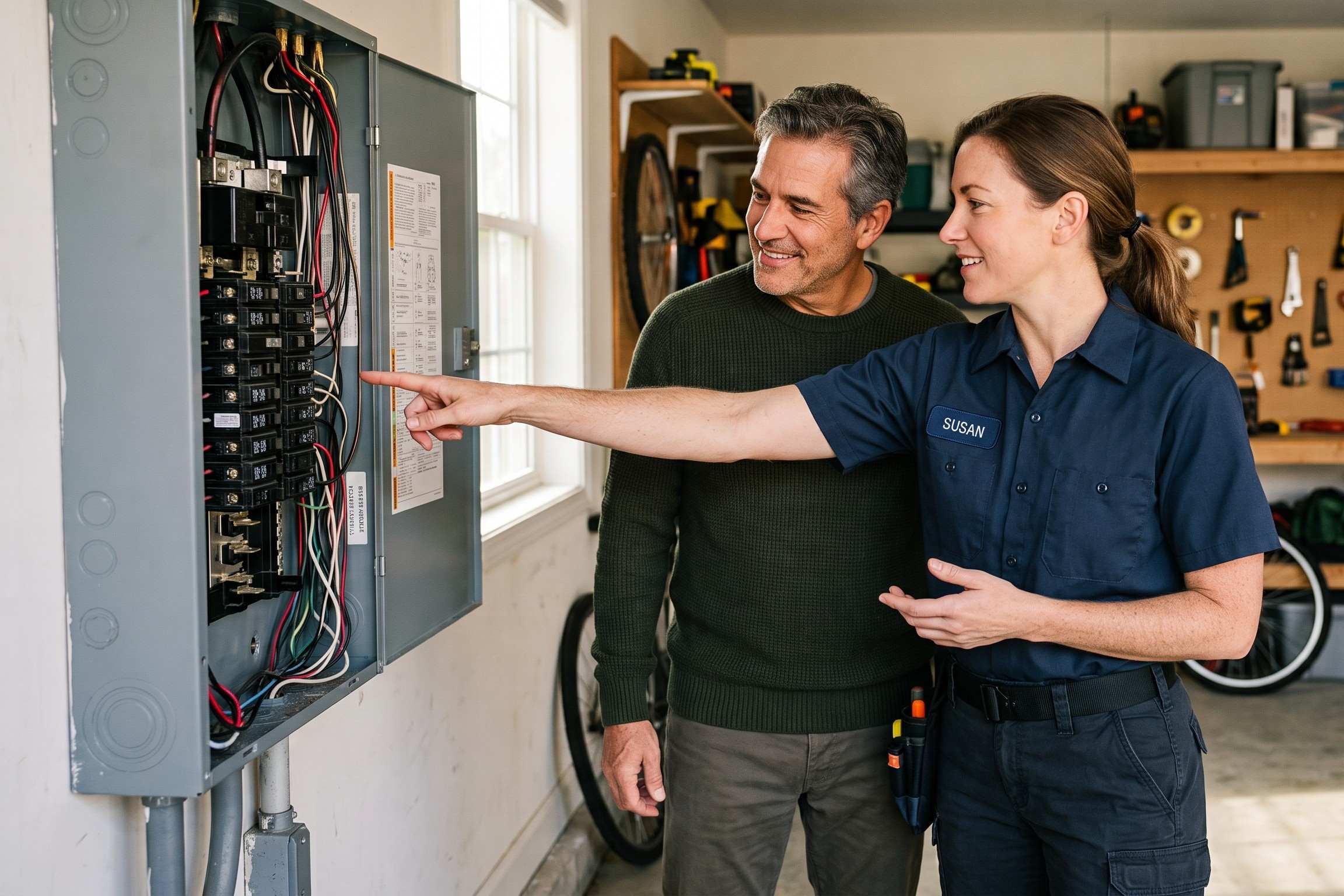
A whole-home surge protector is installed directly at your main electrical panel. When a voltage spike enters through the utility lines, the system immediately redirects the excess electricity safely into the ground before it can reach your home’s internal wiring or ruin your appliances.
Simple Steps to Protect Your Home Right Now
While installing panel-level protection is the best long-term safeguard, there are a few practical habits you can practice during severe late-summer weather:
- Unplug sensitive electronics before major storms: If you know a severe thunderstorm is rolling in, unplug computers, gaming consoles, and secondary TVs.
- Upgrade your power strips: Check old power strips. If they are several years old, they may act as simple extension cords with zero remaining surge protection.
- Give your AC breathing room: Avoid setting your thermostat excessively low during extreme heat. Lowering the temperature demand reduces how frequently your system cycles on and off, minimizing internal electrical spikes.
Keep Your Home Safe and Powered with the help of Ables, Inc.
Late-summer storms and heatwaves are unavoidable, but damage to your appliances doesn’t have to be. Taking a proactive approach to your home’s electrical safety gives you peace of mind no matter what the weather forecast looks like.
If you want to ensure your electrical panel and major appliances are fully protected against seasonal surges, contact the licensed electricians at Ables, Inc. today to learn more about whole-home surge protection.